Bicycle Helmet Size Guide: GB Fitting Steps 2026

Breadcrumb
What is the right bicycle helmet size for you?
A bicycle helmet size is the one that sits level on your head, feels secure before you fasten the straps, and stays comfortable for the whole ride. If a helmet rocks, pinches, or leaves gaps around the temples, it is not the right fit, even if the label looks close. For riders in Great Britain, the goal is simple: match the helmet to your head measurement, then fine-tune the fit so it stays stable on everyday roads, cycle paths, and longer weekend rides.
Start with a flexible tape measure. Wrap it around your head about 1 to 2 cm above your eyebrows and just above your ears. That number, in centimetres, is your starting point. Most adult helmets are sold in size ranges such as 52-56 cm, 55-59 cm, or 58-62 cm. If your measurement sits at the top end of a range, try the next size up as well. Different shell shapes can make one helmet feel better than another.
A good fit matters just as much as safety features. Before buying, it helps to pair sizing with a wider check of construction, labels, and adjustability. That is where bike helmet safety checklist: what to verify before you buy can sharpen your decision. Parents buying for children should be especially careful here, because a helmet with “room to grow” often ends up too loose to protect properly.
How do you measure your head and match the size chart?
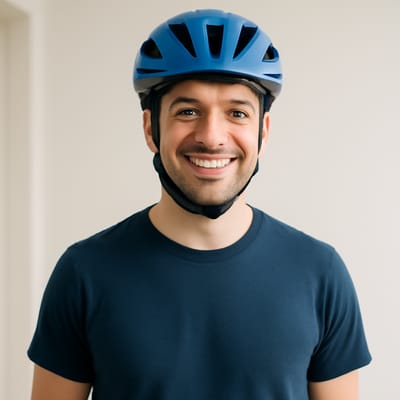
The easiest way to avoid returns and poor fit is to follow a short step-by-step fitting process.
1. Measure your head correctly
Use a soft tape measure around the widest part of your head. Keep it level from forehead to back. Take the measurement two or three times and use the largest consistent result.
2. Compare it with the brand's size chart
Helmet sizing is not fully standardised. One medium may fit very differently from another. Always check the listed centimetre range rather than relying on small, medium, or large alone.
3. Put the helmet on before adjusting straps
A properly sized helmet should feel snug all around without painful pressure points. It should not slide freely when the chin strap is open.
4. Use the rear retention dial
Tighten the cradle until the helmet feels secure. The dial should improve hold, not compensate for a shell that is clearly too big.
5. Recheck after five minutes
Hot spots often appear after a few minutes indoors. Commute riders may prefer a slightly rounder internal shape for daily comfort, while leisure cyclists often notice forehead pressure first on longer rides.
If you want the full process in one place, how to choose the right bicycle helmet size (step-by-step fitting for GB riders) works well as a repeatable checklist while you compare models in store or online.
How should a bike helmet actually fit once it is on?

A bike helmet should sit level, covering your forehead rather than tilting back like a cap. As a quick guide, the front edge usually sits about two finger widths above your eyebrows. That position helps protect the forehead while keeping vision clear.
Next, adjust the side straps so they form a neat V-shape just below each ear. Fasten the chin strap so it feels firm but not restrictive. You should be able to fit one or two fingers between the strap and your chin. Open your mouth wide: the helmet should press slightly down on your head. If nothing moves, the strap may be too loose or the fit system may need refining.
Now do three simple movement tests:
- Shake your head side to side
- Nod forward and back
- Push the helmet gently from front and rear
The helmet should move with your skin, not slide independently. Casual riders often benefit from this simple at-home test because it quickly builds confidence without overcomplicating the process. For parents, the same rule applies to children: a stable fit matters more than buying a larger helmet for future growth.
Fit is only one part of the decision. Coverage, ventilation, and internal padding also affect whether a helmet feels secure over time. Those details become especially important when comparing helmets for commuting, mixed riding, or warmer summer use.
What common sizing mistakes cause discomfort or poor protection?
Most helmet fit problems come from a few predictable mistakes. The first is choosing a size based on guesswork rather than measurement. The second is using the retention dial to rescue a helmet that is fundamentally too large. The third is wearing the helmet too high on the forehead or too far back on the head.
Here are the issues to watch for:
- Helmet rocks forward or backward: usually the wrong size or poor cradle adjustment
- Pressure on one spot only: the shell shape may not suit your head shape
- Straps touch the ears awkwardly: side splitters need repositioning
- Helmet lifts when you look up: chin strap is often too loose
- Gaps around the temples: the helmet may be too wide or simply the wrong internal profile
For shoppers comparing road and commuter styles, shape differences can be as important as features. A lighter, more ventilated model may feel great for fast riding but less stable if its internal fit does not match your head. On the other hand, a more rounded urban design may feel better for everyday stop-start journeys.
Before you buy, combine fit checks with safety basics like condition, labelling, and build quality. bike helmet safety checklist: what to verify before you buy helps you avoid focusing on size alone. It is also worth thinking ahead to helmet protection features, comfort systems, and the best helmet types for different rides, because sizing is only part of a confident purchase.
Which buying checks help GB riders choose with confidence?
Once you know your size, the final step is making sure the helmet suits how you actually ride. A secure fit should come first, but comfort and use case matter because an uncomfortable helmet often ends up unworn. For many riders in Great Britain, that means balancing fit, ventilation, coverage, and adjustability rather than chasing the most expensive option.
Use this short buying framework:
- Confirm the size range matches your head measurement
- Check the helmet sits level with good forehead coverage
- Test the retention system for easy micro-adjustment
- Assess comfort for your ride type, especially on commutes or warm-weather spins
- Review safety information and overall build quality before purchase
Commute riders may prioritise all-day comfort and easy adjustment when wearing caps or changing layers. Leisure cyclists often want a simple, trust-building option that feels intuitive from day one. Parents shopping for children should look for secure fit now, not extra room for next year. A helmet that fits properly today is the safer choice.
As you narrow your shortlist, how to choose the right bicycle helmet size (step-by-step fitting for GB riders) is useful as a final pre-buy check. From there, comparing ride-specific helmet types, strap systems, and protection features can help you choose a model you will genuinely want to wear every time.
Frequently asked questions about bicycle helmet sizing
How tight should a bicycle helmet feel?
A bicycle helmet should feel snug and evenly secure, not painfully tight. It should stay in place before the chin strap is fully tightened, with no major side-to-side movement.
What if I am between two helmet sizes?
If your measurement falls between sizes, try both whenever possible. Choose the one that sits level and secure with normal adjustment, not the one that needs the dial fully tightened to feel stable.
Can I buy a larger helmet for a child to grow into?
No. Parents and guardians should choose a child's helmet that fits properly now, because a loose helmet can shift out of position during a fall. Growth room should never come at the expense of a secure fit.
Are road and commuter helmets sized differently?
They may use similar centimetre ranges, but internal shape, padding, and retention systems can feel very different. Commute riders should focus on real-world comfort and stability, especially for daily wear.
How do casual riders know if a helmet is good enough?
Start with fit, stable positioning, and clear adjustment points. Casual riders usually do best with a straightforward helmet that feels comfortable immediately and passes basic safety checks.
Should the helmet move when I shake my head?
A little movement is normal, but it should move with your skin rather than sliding independently. If it shifts noticeably, revisit the size, retention dial, and strap adjustment.
Do I need to measure my head every time I buy a new helmet?
Yes, it is a good habit. Sizes vary by model, and your current helmet size may not translate perfectly to a different design.
What should I check before buying online?
Measure your head carefully, compare the centimetre range, read the adjustment details, and review the return policy. If possible, use a fitting checklist before removing tags or taking the helmet on a ride.